Not a content creator. A system builder who teaches traders how to think.
Published · Last updated
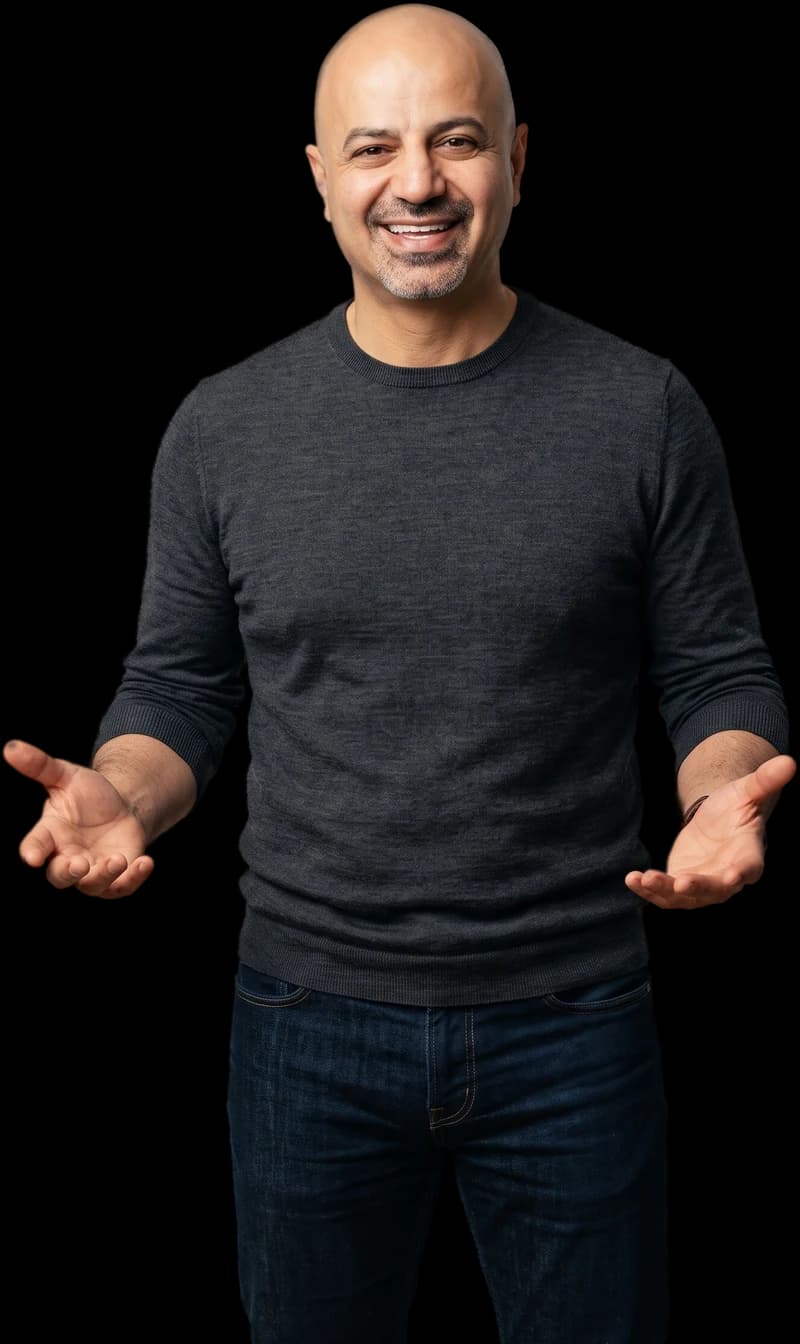
I'm Ali Casey. I build systematic trading strategies and teach the workflow behind them - research, build, test, combine, deploy - to traders who want to understand how their systems actually behave.
My job is to remove false confidence and replace it with structure. Most traders don't fail because they lack ideas. They fail because they can't tell whether an idea is working or just flattering them. A clean backtest feels like proof. It usually isn't.
So the work here is about mechanisms, not predictions. Why strategies decay. Why optimization narrows the range a strategy can survive. Why a portfolio that fails at different times beats a single strategy that looks perfect in-sample. The behavior, not the performance.
I run the Algo Trading Masterclass, write the Overfit newsletter, publish on YouTube, and built AlgoChef - a validation layer for the step most traders skip. All of it ladders to one idea: turning unstructured confidence into structured conviction.
The story · 1994 → now
Thirty years of tuition, one method.
The workflow I teach wasn't designed on a whiteboard. It was paid for, one mistake at a time. Here's the line.
The hook · 1994-2001
1994
The ticker
A young computer-science graduate - University of Technology, Baghdad, class of 1990 - sees the ticker crawl across CNBC and asks the only question an engineer knows how to ask: is this readable? Can math see something I can't?
 CNBC · the 90s
1998
In at the top
I entered the markets almost exactly at the peak of the dot-com bubble. Made a fortune on the way up. Gave it back on the way down. First tuition payment: confidence without structure is expensive.
2001
The floor
I toured the Nasdaq and the NYSE in New York. Standing under the MarketSite wall, watching the numbers I'd been chasing scroll forty feet tall, made it permanent: this was the problem I'd spend my life on.
The tuition · 2002-2013
2002→ 2013
Paying for the education
A decade of chasing 100%-win-rate systems and optimizing them until they broke. Blown accounts - about $270K in losses - funded by building and exiting real businesses along the way. Expensive. But every failure narrowed the search.
The method · 2014-now
2014
The light bulb
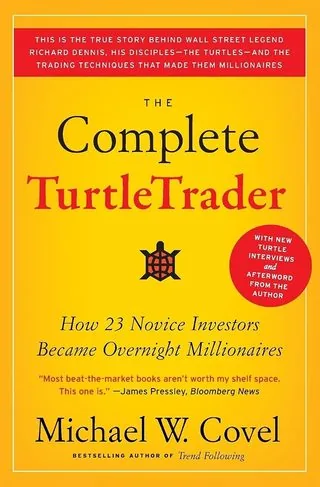
I read The Turtle Traders. Simple systems make money. Trade portfolios, not heroes. Size by probability. Manage risk statistically. Everything I've built since is that page, industrialized.
2016
First proof
I took over our small family fund and ran it on my own portfolios. Steady, systematic, repeatable - the method holding up with money that wasn't only mine.
2018
StatOasis
June 2018. The research stops being private. StatOasis starts as a place to publish the work: the tests, the method, and the results that didn't cooperate.
2019
The channel
August 2019. The first video goes up. Teaching the workflow out loud turns out to be the fastest way to find the holes in it, and the channel becomes the longest-running public record of the method.
2020
Professional validation
A hedge fund leased several of my strategies for its diversification program. In return I got access to their proprietary tooling - and confirmation that the workflow survives professional scrutiny.
2022
Teaching the workflow
Launched the Algo Trading Masterclass: the full process - research, build, test, combine, deploy - taught the way I wish someone had taught me in 1998.
2024
The newsletter
Launched The AlgoTrader: one practical, evidence-driven takeaway per issue, sent to thousands of traders. Two years in it took a sharper name for the same job - Overfit. Skip the hype. Trust the data.
2026
AlgoChef
Launched AlgoChef - validate strategies before you risk real money. Cloud-based robustness testing for algo traders: Monte Carlo simulation across five resampling methods, a live Health Score for every deployed strategy, 100+ performance metrics, and portfolio composition tools. Works with backtests from StrategyQuant X, TradeStation, and MultiCharts.

Now
The Oasis
YouTube, the Overfit newsletter, ATM, the community, AlgoChef. Different doors into one system with one job: turning unstructured confidence into structured conviction.
The receipts · published studies
What the work actually looks like.
Four numbers from the research behind this site. Two of them are the result of an experiment that failed - which is the point: I publish those too.
0 of 648
ICT backtests beat buy-and-hold
Four Smart Money Concepts entries codified into mechanical rules and run across four markets. Nearly every variant was “profitable.” Not one beat doing nothing.
Read the study0 of 2,068
optimized strategies beat buy-and-hold out-of-sample
A 2,304-variant sweep standing in for what an AI does when asked for “the best strategy.” Buy-and-hold returned $87,835 over the same window.
Read the study33,792
variants of three oscillators, tested head to head
RSI, Stochastic and Williams %R on four index ETFs - because “which indicator” is the question beginners ask and the one the data cares least about.
Read the studyAll 32
S&P 500 declines of 10% or more since 1871
Depth, duration and recovery for every one, measured three ways: price, dividends reinvested, and inflation-adjusted.
Read the studyEvery study states its method in full, including the ones that found nothing. Browse the full research archive.
Where to start
- Survive the Decade - see how your instincts hold up against ten years of real markets.
- Overfit - the newsletter. Skip the hype. Trust the data.
Get the best trading research in your inbox.
Delivered +2 times a month - when the work is ready, not on a calendar.I'll never sell your address.Unsubscribe in one click, any time.
Questions people ask
The six asked most often about who is behind this, answered without the marketing hedge.
Who is Ali Casey?
Ali Casey builds systematic trading strategies and teaches the workflow behind them - research, build, test, combine, deploy. He holds a BSc in Computer Science and Control Systems from the University of Technology in Baghdad (1990) - hardware, software, machine language and mathematics, taken when control systems and computer science were taught as one degree. He has traded since 1998 and has worked systematically since 2014, and is the founder of StatOasis and the creator of AlgoChef, writes the Overfit newsletter, and runs the Algo Trading Masterclass.
Is StatOasis a company or a person?
Both names refer to the same operation. StatOasis is Ali Casey: he writes every study, records every video, and runs the newsletter, the masterclass and AlgoChef. There is no editorial team and no ghostwriter - the YouTube channel is titled “Ali Casey | StatOasis” for that reason.
Does StatOasis sell trading signals?
No, and it never has. StatOasis publishes research and teaches a workflow, and sells education and software - the Algo Trading Masterclass and AlgoChef. Every study is free to read on the site, with its data and its method attached.
Why publish experiments that failed?
Because a research site that only publishes its wins is a marketing site. Two of the four studies highlighted on this page are negative results: 0 of 648 ICT backtests and 0 of 2,068 optimized strategies beat buy-and-hold. Those cost the same work as a positive result and say more about how markets behave.
What is there to show that the method works?
The published studies, each with the data and method it was built from. Beyond the site: Ali has run the family fund on these portfolios since 2016, and in 2020 a hedge fund leased several of his strategies for its diversification program.
Is any of this investment advice?
No. Everything published on StatOasis is educational and historical - measurements of what markets did and what strategies would have done. It is not personalised advice, and no study is a recommendation to trade anything.