“99.9% of newsletters I receive are just a pitch for some sale. Ali's are something completely different - every time he picks a topic, he gives the complete analysis.”
- Vitaliy
The newsletter · publishing since 2024
The Overfit Newsletter is a free algorithmic trading newsletter with the numbers left in: one evidence-driven takeaway per issue - what was tested, what survived, and what didn't - pointing to the full study on the site. Practical takeaways you can implement. No fear-mongering or hype.
Get the best trading research in your inbox.
Delivered +2 times a month - when the work is ready, not on a calendar.I'll never sell your address.Unsubscribe in one click, any time.
On screen: a real issue's study.Read “S&P 500 Drawdowns Since 1870” →
From readers
“99.9% of newsletters I receive are just a pitch for some sale. Ali's are something completely different - every time he picks a topic, he gives the complete analysis.”
- Vitaliy
“I've been learning new trading ideas from Ali's newsletters for several years now… I've used several of the functions in my own trading systems, which have performed well.”
- Bruce H.
“The Algo Trader is a goldmine of trading knowledge. It's both informative and actionable.”
- Amir R.
More unedited reader words on the wall of love.
Overfitting is when a model memorizes noise instead of learning the real pattern - it looks accurate on past data and fails the moment it meets anything new. It's the most common way traders fool themselves. The name is a warning label, not a boast: this newsletter exists to help you spot overfitting - in strategies, in market narratives, in your own decision-making - before it costs you.
Each issue delivers one practical takeaway - a finding, a test result, a mistake worth naming - and points to the full article on the site. Topics range across:
Practical takeaways you can implement. No fear-mongering or hype. If that's what you're after, there are plenty of other newsletters. This one is for traders who want to understand how things behave, when they break, and why.
5,800+ traders read it. Launched in 2024 as The AlgoTrader; renamed Overfit in 2026 - same author, better backtesting engine, expanded thorough takeaways.
Written by Ali Casey, founder of StatOasis and AlgoChef, creator of the Algo Trading Masterclass (ATM), with over 10 years of experience building systematic trading tools - building algorithmic strategies, testing ideas with data, and teaching traders how to build structured, portfolio-based trading workflows.
Not ready to subscribe? Browse the research archive - every issue is free to read on the site.
The last 10 that went out, newest first. Every one is free to read in full on the site.
Browse every issue in the archive - searchable, filterable by topic, sortable.
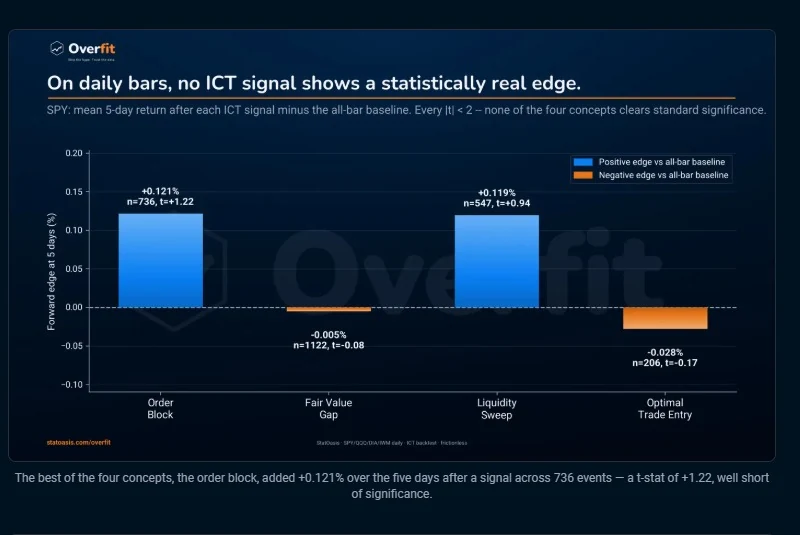
Every issue is a study, and every study earns its chart. A few from the archive:
All of these are free to read in the Overfit research archive. Subscribing just means the next one finds you.
The six things readers ask most, answered without the marketing hedge.
Two or more issues a month. There is no fixed day - an issue goes out when the study behind it is finished, which is the only answer that stays true.
One evidence-driven takeaway per issue, with the numbers left in: what was tested, what survived, and what didn't - plus a link to the full study on the site and its dataset where the study has one.
Yes. There is no paid tier of the newsletter, and every issue's full study is free to read on the site.
Yes. The list above links the ten most recent, and the Overfit research archive holds every one of them - no subscription needed to read.
One click in any issue. No confirmation loop, no exit survey.
Neither. It is research: what was tested and what the data said. Issues are educational and historical, and nothing in them is investment advice.